



22 Best Things to Do in Antibes: An Insider’s Guide
Antibes is a hidden gem on the French Riviera and a must-see for travelers. Follow this guide to the best things to do in Antibes for the ultimate visit!
This post may contain affiliate links. If you click on a link and make a purchase I may earn a commission at no additional cost to you. Learn more.
Traveling by train offers speed, comfort, and breathtaking scenery, making it my go-to choice for getting to my home away from home, Antibes.
I still remember how excited my dad and I were planning our first two week-long trip to France over a decade ago, complete with taking the iconic (at least to Americans) high-speed train.
Since then, I’ve taken the train between Paris and the South of France three more times (five if you count the return trips), and I absolutely love it.
It’s funny to look back over a decade later and realize some of the simple mistakes or things we missed learning about before that first journey.
We didn’t have Tiktok or Instagram giving us all the local travel tips we needed back then, and we certainly didn’t have Google Translate (which is a big game-changer for reading signs and menus).
Lucky for you, you’ve got those resources, plus me, to tell you everything you need to know about taking the train from Paris to the South of France.
So sit back and get ready to take notes, because we’re about to dive into everything you need to know!
Skip Ahead
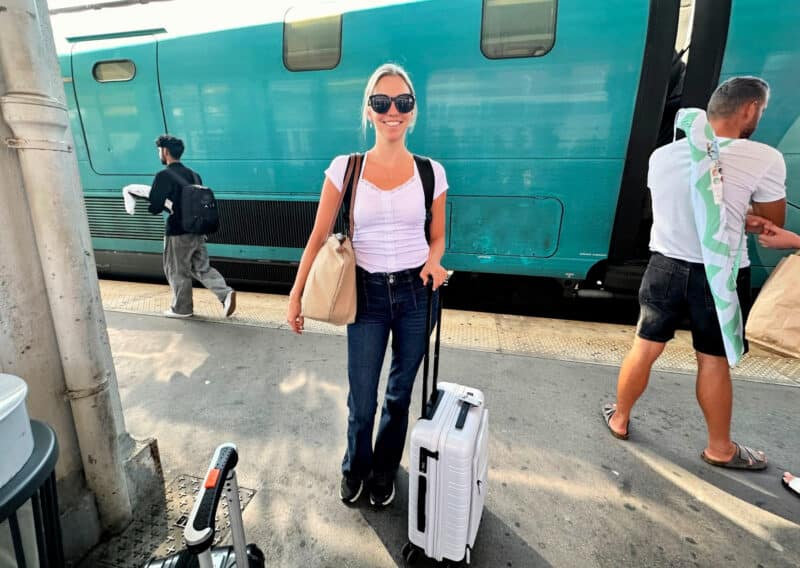
Train travel in Europe (and a lot of other countries) is incredibly fast, and truly a step above what you see offered in the United States.
The TGV high-speed trains can get you from Paris to cities like Nice, Marseille, and Avignon in just a few hours, often quicker than flying when you factor in airport wait times and traveling to and from the airport.
Plus, the comfort is unbeatable with spacious seating, onboard Wi-Fi, and stunning countryside views (however, sadly the bathrooms are about on par with the ones the planes).
One of the best parts? Train stations are centrally located, so you save time on local transport compared to airports that are usually on the outskirts.
Plus, booking tickets through SNCF is a breeze, with easy digital options for purchasing and seat reservations on their app, or on TrainLine app, which is my preferred buying option because it feels more user friendly. And if you’re Eco-conscious, TGV trains have a significantly lower carbon footprint than driving or flying.
For me, it’s so much easier to roll up to the train station, settle into my seat with a coffee and a couple snacks, and get some work done during the ride.
Then, I get off right in Antibes, ready to immediately drop my bags and get my first gelato of the summer at Gelateria del Porto (the best in the world).
Whether you’re heading to tourist favorites like Cannes and Nice or exploring other southern gems, train travel is the way to go.
The TGV network is your ticket to major cities in Southern France from Paris.
Starting at Paris-Gare de Lyon, you can hop on a high-speed train to Marseille in about 3 hours or Nice in around 5 hours. I’ve done this trip multiple times, and it’s always a breeze.
If you’re heading to Provence, you can stop in beautiful places like Avignon and Aix-en-Provence. My dad and I once took the train from Paris through Provence, stopping in Aix and St. Rémy-de-Provence for a long weekend (you’ll need a car rental, which can be done in Aix), before heading over to Nice on our first visit to France.
It was an incredible trip, and seeing the countryside from the train was a highlight. These TGV trains zip along at speeds up to 320 km/h (just under 200 miles per hour), making travel super efficient.
For smaller towns, regional Intercités services are available, though they’re a bit slower than the TGV.
Depending on your final destination, you might need to make a transfer, but it’s all part of the adventure. Some trains make more stops than others, which you’ll quickly notice when viewing the booking times.
Whether you’re off to explore the bustling cities or the charming countryside, the train routes from Paris have got you covered.
This is one of my most used apps, and the only app you need to make booking train tickets in Europe a breeze!

Paris-Gare de Lyon is one of Paris’s six major train stations, and it’s super easy to access from anywhere in the city thanks to its great public transit connections.
You’ll arrive to a station bustling with thousands of daily passengers and plenty of shops, restaurants (including the iconic Le Train Bleu), and waiting lounges to keep you comfortable.
Just make sure to arrive early, ideally with snacks and a drink in hand (buy them at Monoprix beforehand to save money), especially during peak travel seasons, to navigate the busy terminal smoothly and start your journey stress-free.
And worst case, if you didn’t have time to grab snacks, most trains have a dining car. However, but all do, so double-check when buying your tickets. The last thing you want is to be on the train for 5+ hours with no snacks or drinks.
Fun Fact: Gare de Lyon is where all the trains to and from the south arrive in Paris.
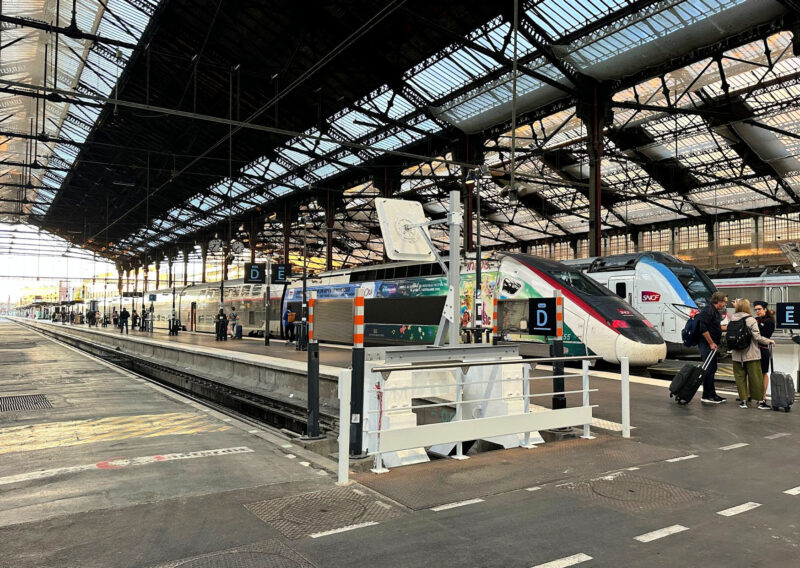
The TGV (Train à Grande Vitesse) is France’s premier high-speed train service, and it’s hands down the best way to travel from Paris to major cities in the South like Marseille, Nice, and Montpellier.
These trains can zip along at speeds over 200 mph, making the journey to places like Avignon or Aix-en-Provence just 2.5 to 3 hours, compared to an 8-hour drive.
What sets the TGV apart from other train options?
For starters, the seats are incredibly comfortable, offering more legroom and space to relax compared to regional trains.
Whether you choose first-class or second-class seating, you’ll enjoy comfortable cars. I’ve sat in both, and they’re great.
Plus, TGV trains come with onboard Wi-Fi (that generally works), power outlets, and dining car services, making the ride not just fast but also enjoyable and productive if you need to get some work done.
And the best part is that the TGV also offers the convenience of fewer stops and more direct routes, saving you time and hassle.
Since these are the more desirable trains, I always recommend booking your tickets in advance since demand is high, especially during holidays and peak season during the summer.
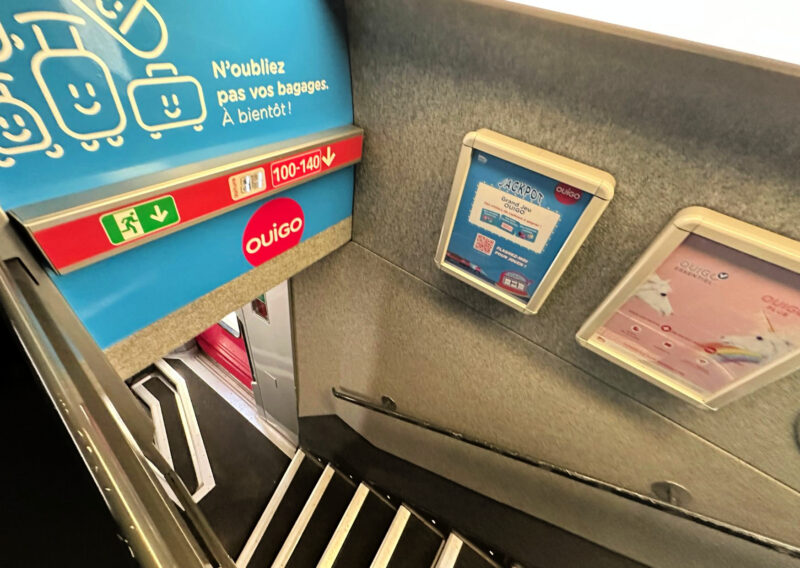
If you’re visiting Euorpe on a budget, the affordable way to travel by high-speed train is Ouigo Trains, which are operated by SNCF. While these trains still reach impressive speeds, ticket prices can be as low as €10 if you book early (sadly, as a last-minute planner, I’ve never been early enough to see these prices).
Ouigo trains typically depart from suburban stations like Marne-la-Vallée or Massy, as well as from central hubs like Gare de Lyon. So while the default Paris station should be Gare de Lyon, always double check.
The amenities are more basic to keep costs low, so expect fewer luggage allowances and no onboard cafés. Basically, this makes Ouigo ideal for short trips or if you’re packing light.
I’ve traveled with Ouigo a few times from Gare de Lyon to Antibes because their timing always works better for me, and so far I’ve had no issues with Ouigo during the few trips I’ve done with them, but definitely pack your own food since there are no dining services on board.
Typically, I always swing by a Monoprix the night before to pick up a couple snacks, or if I’m feeling really motivated and have the time, I’ll collect a few macrons from my favorite macaron place in Paris, Pierre Hermes.
Followed by a small screwtop bottle of wine (easy to find in Monoprix and comes with a cup on top), along with some cashews, a banana, sparkling water, and some chocolates from Alain Ducasse (trust me, they’re amazing).
To be fair, while Ouigo is a great way to save money while still enjoying the speed and efficiency of high-speed rail, I think my snacking habits about even out the ticket costs. So fair warning if you’re a luxury dessert girl like me and following my lead with the shopping.
If you want to get a visual of what
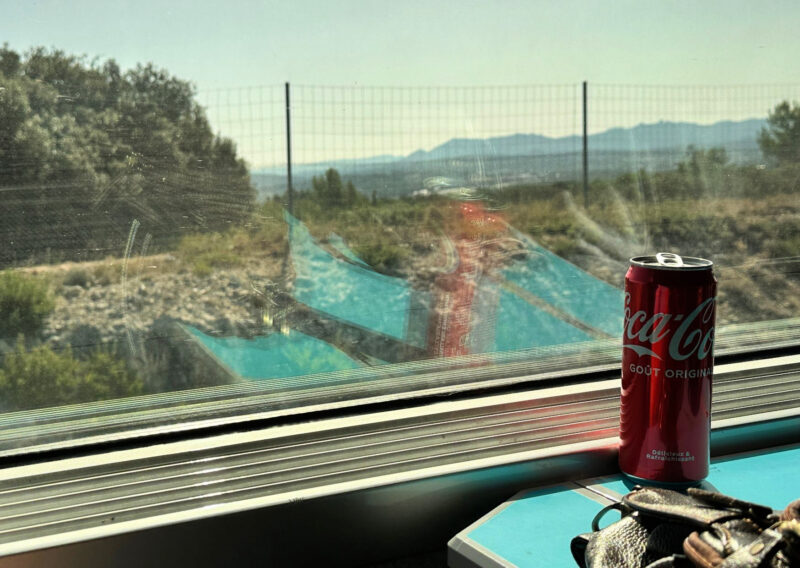
If you’re looking to connect Paris to smaller cities and towns in the South, the Intercités train network will likely come into play.
Basically, these trains cover medium distances not served by high-speed routes. While they’re slower than TGV trains, they’re reliable and more budget-friendly.
Sleeper trains, which are often part of the Intercités network, let you pick between shared couchettes or private compartments, depending on your budget.
I haven’t taken a sleeper train in France yet. I almost did a few summers ago, but opted to stay in Paris for the night instead to see friends. So far the only time I’ve taken a sleeper train was in India, which I swore would be my last non-luxury sleeper experience.
However, after hearing friends say it wasn’t too bad, I’m tempted to give it a shot this summer.
On the bright side, you’ll save on the cost of a hotel for one night. The downside is you arrive so early that you have to kill time before you can check into most places. Still, it’s a unique experience and might be worth trying out!
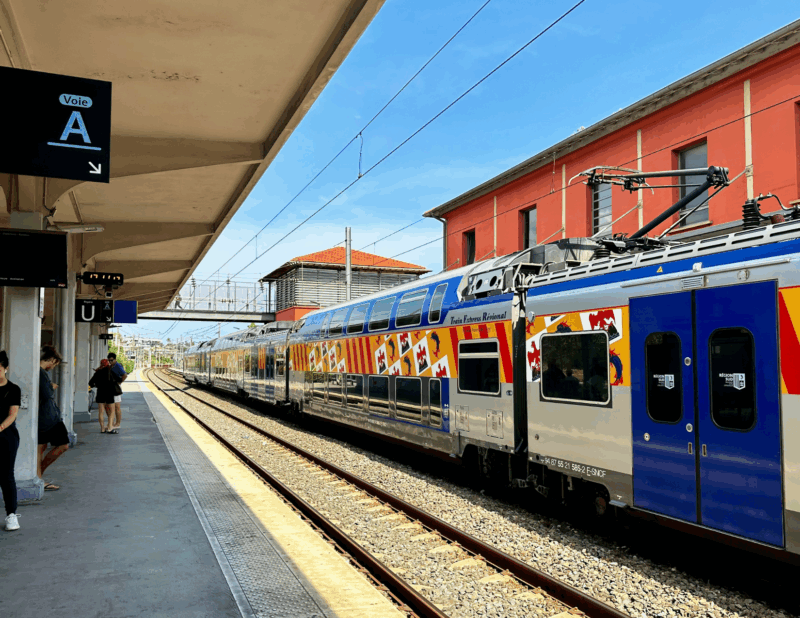
For more localized travel, you’ll want to use a combo of the high speed train and the TER (Transport Express Régional) trains. These trains are run by SNCF, and don’t require reservations (buy your tickets before getting on the train).
They’re perfect for connecting the South’s smaller towns and communities to regional hubs, and something I take all the time while in the Cote d’Azur.
While TER trains are slower and less luxurious, they’re invaluable for exploring off-the-beaten-path destinations. For example, you can take a TGV to Marseille and then hop on a TER train to visit picturesque Provençal villages. They leave frequently, and the fares are more affordable than other options, making TER trains ideal for short hops.
If you’re looking to explore charming, lesser-known spots in the South of France, TER trains are solid, and something you’ll absolutely be using. They might not be the fastest, but they offer a chance to see some truly beautiful and unique places.
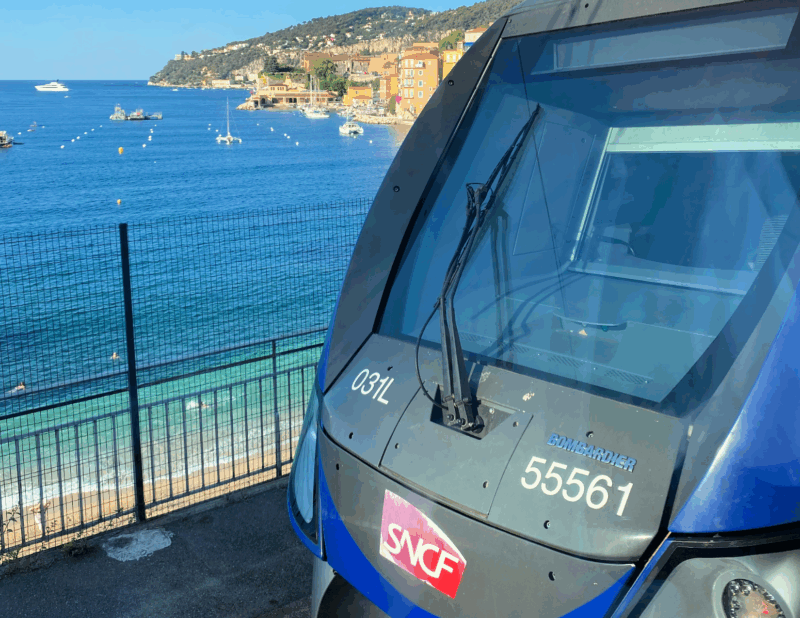
SNCF Connect is the official platform for booking French train tickets. It lets you to search schedules, compare prices, and book e-tickets. You’ll also find real-time updates on train delays or cancellations.
Trainline, on the other hand, works as a platform that shows and helps you book across multiple train operators.
I really like that it offers an intuitive interface, supports multiple languages, and lets you compare trains from different operators, which is why it’s always my default app when booking train tickets in Europe. This makes it ideal for travelers looking for a user-friendly booking experience.
The great thing is both platforms have mobile apps, letting you store your e-tickets securely to access them offline.
This is one of my most used apps, and the only app you need to make booking train tickets in Europe a breeze!
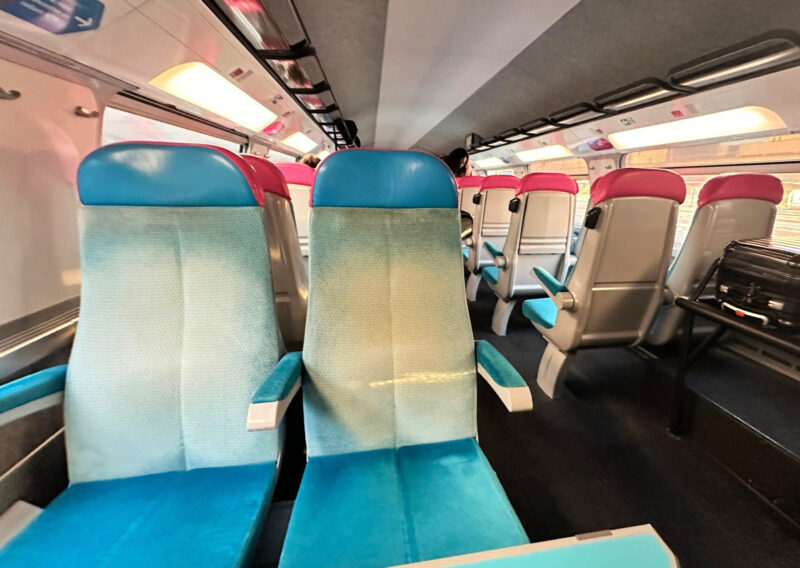
When it comes to seating, I always try to reserve a seat near the baggage rack. There can be theft on trains, so it’s ideal to be able to see your luggage at all times. If you can’t get a seat near the rack, I recommend locking your bag at the very least.
Most people end up storing their luggage in the racks by the bathrooms, so seats near a luggage rack are prime. You’ll need to board at the first call to secure this coveted inter-car luggage rack.
I’ve sat at both the tables and in individual seats. I prefer the tables, though if you’re traveling solo, keep in mind that you’ll likely end up seated with other people, sharing the under-table and table space. The regular rows offer more defined personal space.

Booking tickets early is key to securing the best deals. Reservations for TGV trains typically open 3-4 months in advance, and some routes even offer booking up to 6 months prior. Early booking gives you access to the cheapest fares, often labeled as “Prem’s.”
For the best deals, it’s smart to avoid peak travel times like weekends and holidays. Instead, opt for trains departing during off-peak hours, like early mornings or midweek afternoons.
I’m partial to earlyish mornings, since that means you’ll get into the Cote d’Azur in the afternoon with enough time for a stop at a cafe and then check-in.
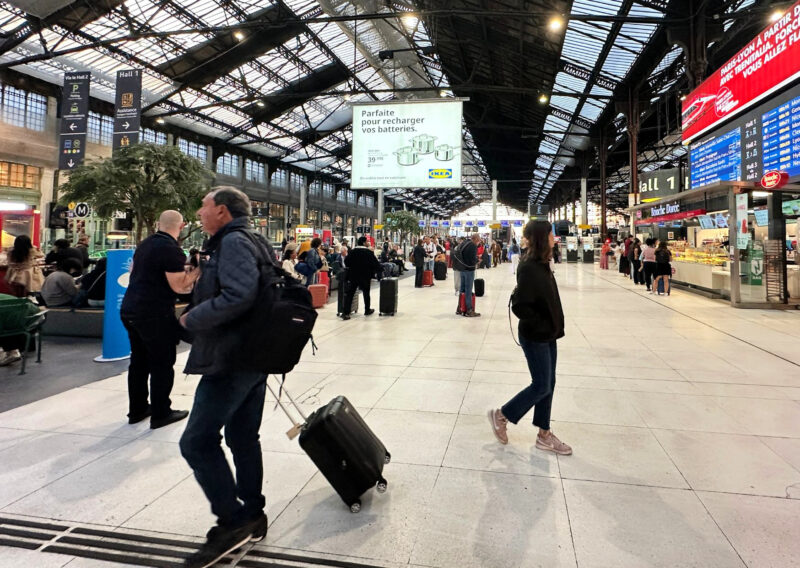
Booking your ticket early unlocks lower prices and better seat options, since popular routes fill up quickly. It’s also smart to avoid peak travel periods like weekends and French holidays, when train stations like Gare de Lyon can get crowded.
For a quieter travel experience, look for departures on weekdays or mid-morning hours. Shoulder seasons, like spring or fall, are my favorite time to travel in France , since it means not only pleasant weather but also mean less competition for bookings. If your schedule is uncertain, use flexible fare options.
I also like to check timetables for direct TGV trains that minimize transfers and save time. This is especially helpful for long-distance routes since transfers can be common.
Another tip I always tell friends is to keep an eye on French news, as the French love to strike, which can sometimes affect the train system. I’ve had it almost cause problems for my travel plans twice, but thankfully I missed the strikes by a day. They tend to time the strikes with peak travel periods to make their point, so staying informed can help you avoid any disruptions.

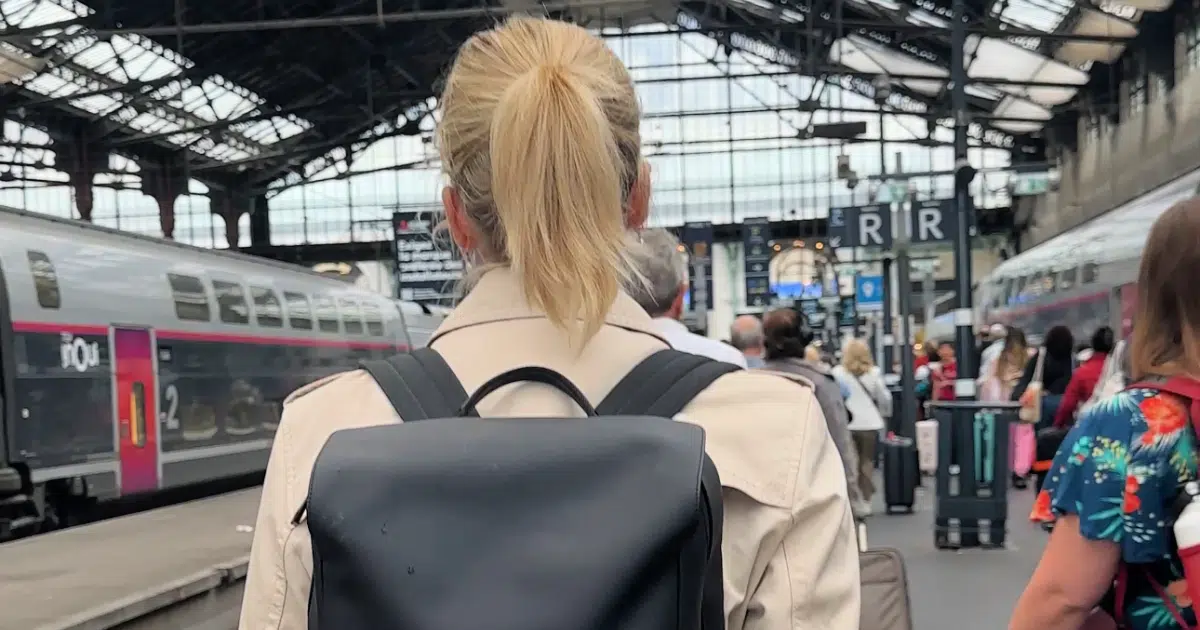
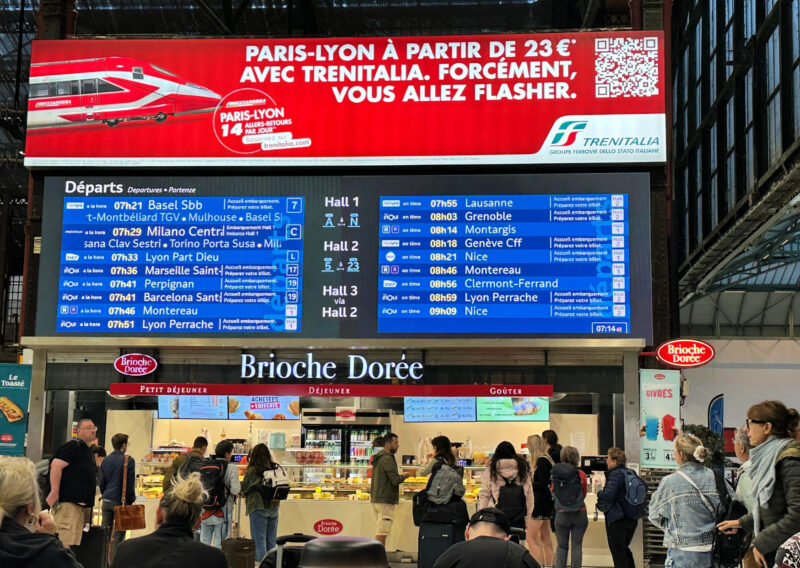
Navigating a major hub like Gare de Lyon can be a bit of a scramble, especially during peak hours. I usually recommend arriving 20 to 30 minutes before your departure to give yourself a bit of a buffer, and time to find your platform, but keep in mind that they typically only announce the platform number 15-20 minutes in advance.
If you want a totally stress-free experience and time for a quick espresso, or you’re traveling with heavy luggage, arriving 40-60 minutes early is a pro move.
It also helps to know that Gare de Lyon is split into different areas: Hall 1 is where you’ll find most TGV trains, while Hall 2 is generally for regional lines. Just follow the signs for “Grandes Lignes” to find the main departures.
When I took the train from Paris to Antibes last summer, Trainline app told me ahead of time which hall we’d be in (Hall 1). Which helps with cutting down on the stress of navigating the station first thing in the morning.
It’s also smart to have your ticket or QR code ready for the automated barriers to get onto the platform, as the line gets crazy fast once the platform is announced.
If you ever feel lost, there are plenty of information desks and staff around to help point you in the right direction.

TGV trains have a good amount of luggage storage, including overhead racks and dedicated spaces for larger suitcases near the carriage doors.
However, during peak season, it’s not uncommon to see them totally packed solid.
It’s a good idea to label your bags with your contact information in case they get misplaced. For extra peace of mind, try to reserve a seat near the luggage rack so you can keep an eye on your belongings.
Using AirTags or locks can also provide additional protection. Sometimes people take bags into the bathroom, go through them, and put them back, so you won’t even know you’ve been stolen from until much later.
And don’t forget to be mindful of your personal items under your seat, as thieves have been known to slide things out of bags in front of them, in fact, a popular influencer I follow had this happen last summer.

One of the great things about traveling on TGV trains is the variety of food options available. Many TGV trains feature a dining car, typically located in the middle of the train, where you can purchase snacks, light meals, and beverages.
Typically, there’s a selection includes sandwiches, salads, pastries, and a variety of drinks, including coffee, tea, and soft drinks.
However, it’s important to note that not all trains have dining cars, so to avoid any inconvenience, check ahead and bring your own snacks and drinks, especially if you have specific dietary preferences or just want to ensure you have your favorite treats on hand.
Packing a small picnic can make your journey even more enjoyable, and it’s a great way to save some money (depending on your
Just be mindful of any strong-smelling foods out of consideration for your fellow passengers. I always go for a sparkling water, a box of Pierre Hermes macrons, maybe some Alain Ducasse chocolates, a bag of cashews, and a banana.

Restrooms on TGV trains are clean and well-maintained, however, obviously, it’s nicer at the beginning of the journey than at the end. You’ll find them at the ends of each carriage, just next to the luggage racks and steps.
They have basic amenities like toilet paper, soap, and hand dryers. However, it’s always a good idea to carry a small pack of tissues and hand sanitizer, just in case.
I always keep a Noshinku in my bag since even after washing your hands you’ll inevitably have to touch the door handle on the bathroom and on the carriage.

Picking the right seat can make a big difference in your trip. First-class seats offer larger, more comfortable seating with extra legroom and a quieter atmosphere, and occasionally a meal or
While second-class seats are still quite comfortable and spacious, providing plenty of legroom and a pleasant ride for most travelers.
I always try to reserve a seat near the baggage rack to keep an eye on my luggage, which is important for preventing theft. If you can’t get a seat near the rack, consider using AirTags or locks for extra protection.
I’ve sat at both the tables and in individual seats. While I prefer the tables for longer journeys because they offer more space to spread out, keep in mind that if you’re traveling solo, you’ll likely be sharing the under-table and table space with others. Individual seats provide more defined personal space, which can be more comfortable for some travelers.
If you’re traveling in a group, look early to score seating at one of the tables, as this setup is perfect for socializing and makes the journey more enjoyable.
And if you’re prone to motion sickness, make sure you book a seat facing the right way, as the last thing you’ll want is to end up riding backwards for hours.

Traveling by train in France can be a smooth experience, even if you don’t speak French. The French appreciate when you at least try to speak their language.
They normally smile politely and continue in English 99% of the time, but never assume and go straight to speaking English. The French can get annoyed when you don’t make an effort.
Although TGV trains announce most information in both French and English, knowing a few key phrases and tips can make your journey easier, especially if you need to interact with other passengers. Bonus points if you start a Duolingo streak before your trip!
By knowing a few key phrases and following these tips, you can navigate the French train system with confidence, even if you don’t speak the language fluently. Enjoy your journey!
This is one of my most used apps, and the only app you need to make booking train tickets in Europe a breeze!
In this video, I’ll guide you step-by-step through the entire journey, from booking your tickets to navigating the train stations and enjoying the ride.
You’ll see the breathtaking scenery, get tips on what to pack, and learn how to make the most of your travel experience.
Whether you’re a first-time traveler or a seasoned explorer, this visual guide will help you travel with ease and confidence. Don’t forget to like, subscribe, and hit the bell for more travel tips and adventures!
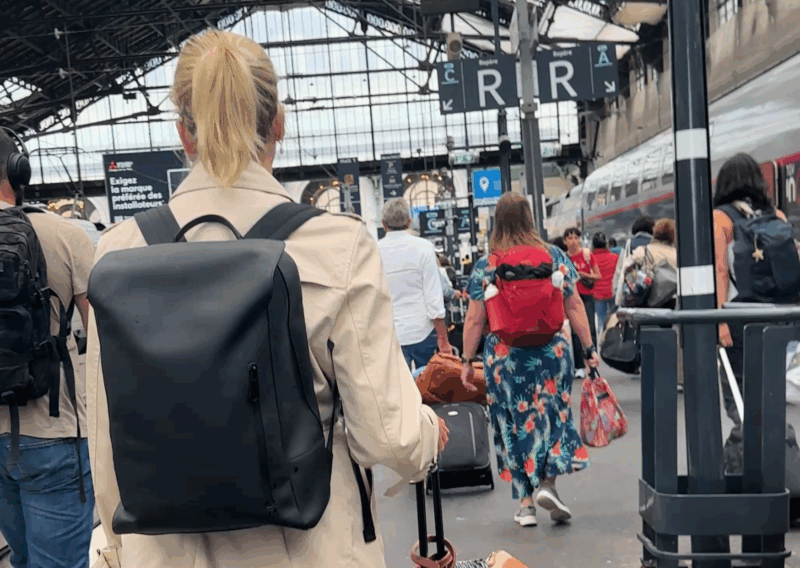
Traveling solo by train can be a wonderful adventure, especially if you’re like me and love having time to sit alone to read or work uninterrupted.
To make it a smooth and enjoyable journey, start by packing smart. Remember, anything you bring, you’ll be carrying.
I know how easy it is to over-pack, especially when you’re excited to go to one of the most fashionable countries in the world, but learn from my mistakes: it’s not smart solo on the train.
Over all my years of solo travel in France, and around the world, I highly suggest sticking to a carry-on bag that’s compact, lightweight and easy to carry and store.
For your personal item, don’t forget to pack essentials like snacks, a
Booking tickets in advance is another key tip. Tickets are often cheaper when purchased online ahead of time, plus you can make sure you have a seat near the luggage rack.
Security is important, especially when traveling solo. Keep your belongings close, particularly in busy stations or crowded trains. Always keep an eye on your luggage and consider using locks or AirTags for extra security.
The hardest thing about being solo is having to use the restroom. I always bring my backpack or purse with my most important things (phone, cards, cash) with me to the toilet just in case. I also always go while the train is between stations to cut down on the chances someone might grab my personal item if i need to leave the backpack portion at the seats.
Staying connected is crucial for a hassle-free journey. Download train apps like SNCF Connect or Trainline, ahead of time. These will help with with real-time updates, ticket management, and navigation for your trip.
Also, make sure your phone, tablet, or power bank is fully charged before your trip. Most trains offer charging outlets, but starting your journey with fully charged devices keeps you stress-free and entertained.
And don’t be afraid to strike up a chat; you never know what interesting stories you might hear, or what new friends might be right around the corner.

On my first two trips to the South of France, I chose Nice as my base, once solo and once with my dad. Both times, it was the perfect choice, and I highly recommend it for most people.
Nice is often considered the gateway to the French Riviera, and one of my favorite things about staying there is traveling there by train is a breeze. The high-speed TGV will bring you directly into the city via its central station.
Since the famous Promenade des Anglais is about a fifteen minute stroll away, there’s lots of hotels and Airbnbs in the area, some with its stunning Mediterranean views as you get closer to the promenade.
Nice is perfect for a mix of relaxation and exploration. You’ll spend time wandering through the Old Town (Vieux Nice) with its narrow alleyways, colorful markets, and Baroque architecture.
And, if you’re a museum fan, don’t miss the Matisse Museum, which celebrates the legacy of the renowned artist. Nature lovers, head to the promenade, and Colline du Château.
From Nice, short regional train rides can whisk you away to nearby coastal gems like Villefranche-sur-Mer or my all-time favorite, Antibes.
Plus, Nice is situated smack dab between Cannes and Monaco, making it a great middle point for day trips. Whether you’re a first-time visitor or a seasoned traveler, Nice is a fantastic base for exploring the French Riviera.
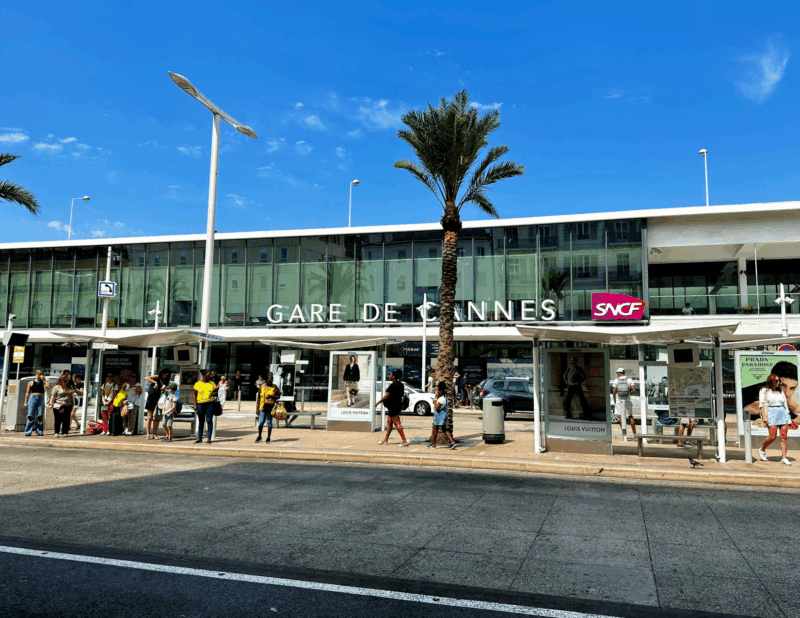
Cannes is synonymous with luxury and the world-famous Cannes Film Festival, and the train station is conveniently located near the bustling Boulevard de la Croisette (about a ten minute walk), where you can stroll past upscale shops and iconic hotels.
The Le Suquet district, perched on a hill, provides panoramic views and a glimpse into the city’s historical roots. The beaches here, both private and public, are also perfect for soaking up the Riviera sun.
Regional trains also connect Cannes to nearby towns like Grasse, known for its perfume heritage, as well as other popular spots like Eze, Antibes, and Monaco, making it an easy base
to your itinerary. While Cannes is fun to visit, I wouldn’t necessarily recommend it as a base unless you’re set on day trips to St. Tropez and Île Sainte-Marguerite by boat or ferry, which are conveniently accessible from Cannes, or just planning on having a party weekend.
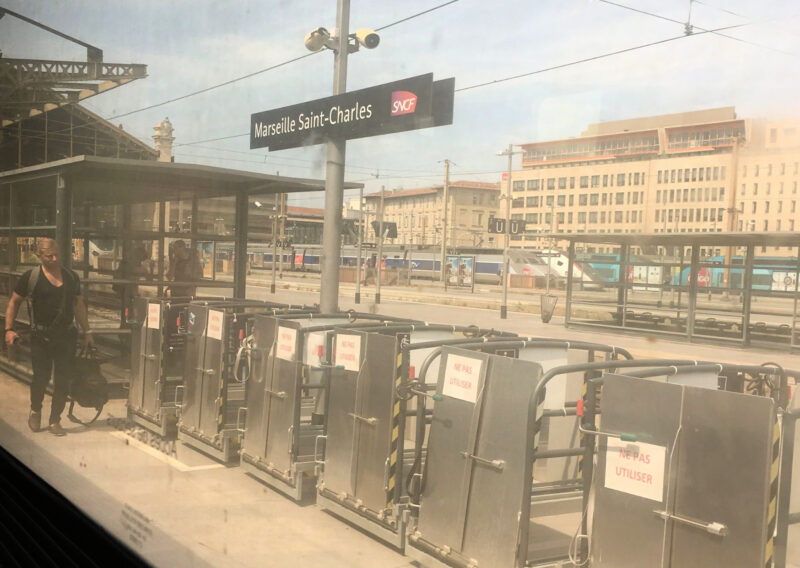
While Nice and Cannes are fantastic, there are other southern gems worth exploring by train.
If you’re looking to stay by the sea, Marseille, France’s oldest city, offers a fascinating blend of history and modernity with attractions like the Old Port and the stunning Basilica of Notre-Dame de la Garde.
Avignon, famous for the Palais des Papes, is a stunning cultural treasure that’s easily accessible via TGV from Paris or from the Cote d’Azur.
And don’t miss Aix-en-Provence, known for its vibrant art scene and charming streets.
Or, if you want to be really adventurous, do what my dad and I did and rent a car at the Aix-en-Provence station, then drive a short distance to the charming village of St-Remy-de-Provence.
This is one of my most used apps, and the only app you need to make booking train tickets in Europe a breeze!

One of my favorite things about visiting Paris is that it serves as a hub for seamless international rail connections, letting you explore destinations both within France and across Europe.
I’ve taken the Eurostar a few times, and it’s a great option. Eurostar connects Paris to London in about 2 hours and 16 minutes via high-speed rail. Departing from Gare du Nord, you’ll enjoy comfortable seating and onboard Wi-Fi.
But fair warning, the security line is crazy, so get there early. I once waited almost two hours in the line for the border patrol during the holidays.
It’s smart to book tickets in advance, especially during peak seasons, to secure the best prices and seats. If you want to see what taking the Eurostar is like, check out my YouTube channel to watch me take it from London to Paris, and an article on traveling between London and Paris.
The other option you have is the Thalys, which links Paris with Belgium, the Netherlands, and Germany. This makes places like Brussels and Amsterdam easily accessible, with travel times as short as 1 hour 22 minutes to Brussels.
Plus, Thalys offers premium services on its trains, including food and drink options, power outlets, and spacious seating across different class tiers. Both Eurostar and Thalys emphasize speed, comfort, and reliability, solidifying their reputations as top international rail options.
For other travel, SNCF’s TGV trains offer high-speed access to major European destinations. For example, TGV services can take you from Paris to Geneva in 3 hours or Barcelona in under 6.5 hours. You’ll find modern amenities like reclining seats and quiet zones for uninterrupted travel, making long journeys comfortable.
I’ve also taken regional trains to places like Bruges, Lille, and Lyon from Paris, and they offer a convenient way to explore more of Europe. I went on the train to Lille and Lyon during the month and I half I lived in Paris during 2023, and loved both trips.
They’re so easy to get to on the train, and make amazing weekends away from city. Both Lille and Lyon have so much to offer on the culinary front, and the museums are fantastic!
You can check out my Lille vlog series here, and my whole Lyon travel vlog series here.
And not to leave out Bruges, if you’re debating it, it also was fantastic. While I took the train there from London, I’d assume the one from Paris will be just as simple. Bruges was so lovely to stroll around, and it also had a great culinary scene.
By leveraging these international train connections, you’ll truly have the adventure of a lifetime, and see more of France (and possibly Belgium), than most tourists.
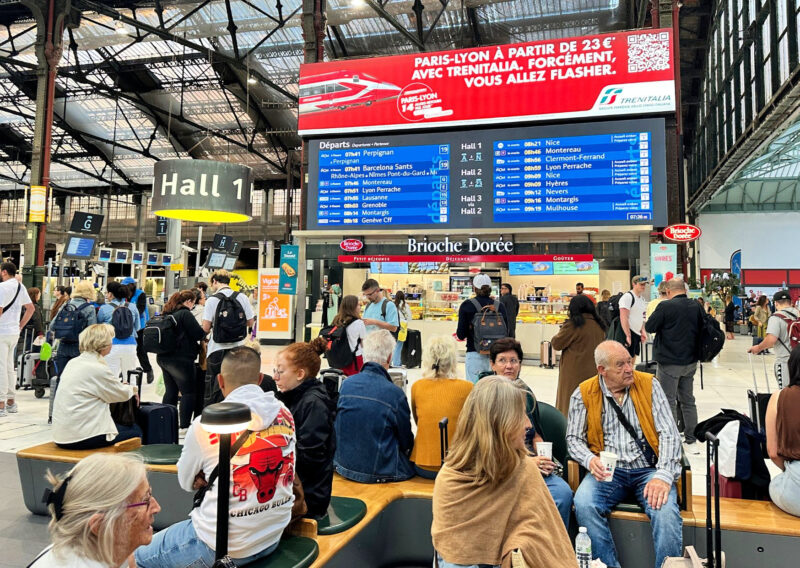
Travel times vary depending on your destination. Trains to Marseille typically take around 3 hours, while journeys to Nice can last about 5.5 to 6 hours. Montpellier is reachable in approximately 3.5 hours via TGV high-speed services.
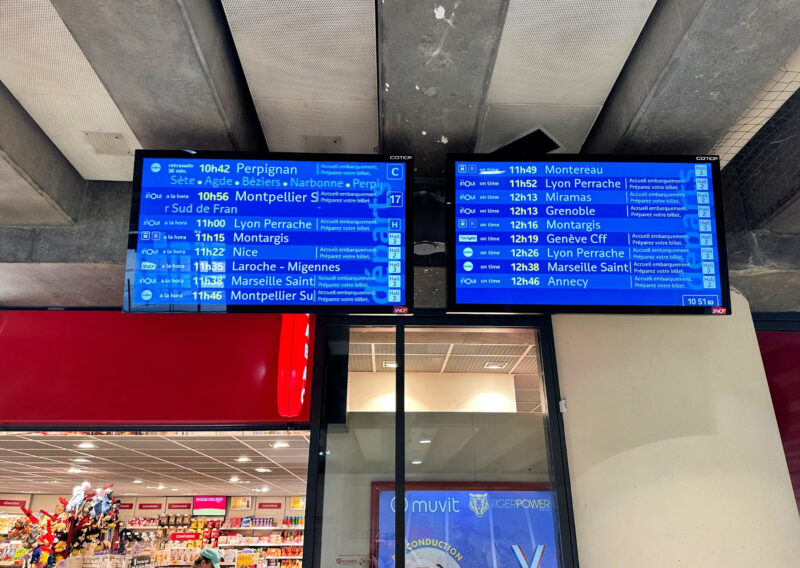
You can access schedules through platforms like Trainline or the SNCF’s official website. Schedules are updated regularly and include both high-speed and regional services.
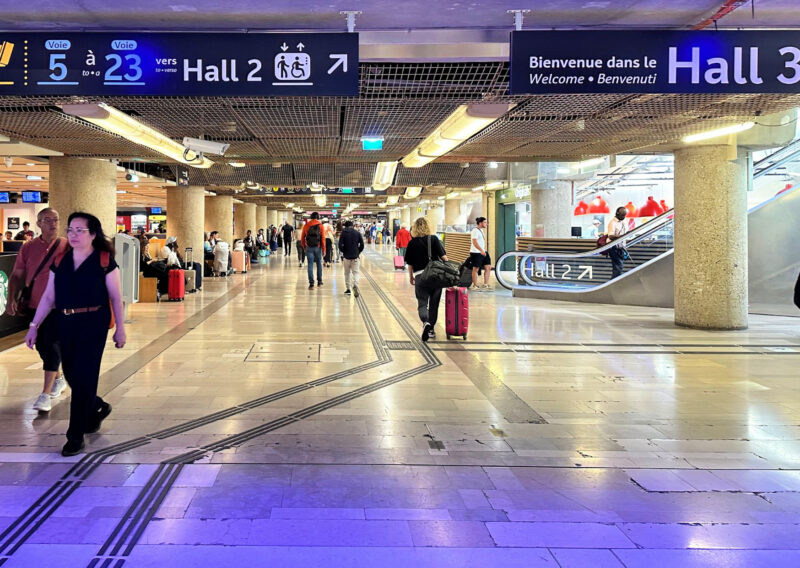
TGV is the most recommended service for traveling to Nice. It offers fast and comfortable journeys from Paris to the French Riviera, departing from Gare de Lyon.
Antibes is a hidden gem on the French Riviera and a must-see for travelers. Follow this guide to the best things to do in Antibes for the ultimate visit!
After spending tons of summers visiting the French Riviera, I've come up with this list of the best places in the South of France. Get ready for vacation inspo!
There’s a ton to do in Nice, so save yourself time and energy by using this list of the best things to do in Nice to plan your next visit!
There’s so many things to do in Cannes, that even after a decade of visiting every summer, I’m still finding new gems. Check out some of my all-time favorites!
There are tons of stunning towns along the French Riviera. Use this list of the best day trips from Nice to guarantee you'll see all the riviera has to offer!
Antibes Old Town is my favorite place on the French Riviera. Here’s my guide to the best beaches, food, and local spots you won’t want to miss.
Leave a Comment